I’ve tasted this over three days and it has changed a fair bit in that time.
At first, the flavour profile and mid-palate are spot on in terms of regional character. There’s a particular fleshiness that, whatever misgivings one might have about warmer climate Shiraz (I have very few, in case you’re wondering), is undeniably generous and seductive, and a hallmark of this region. This has that particular plump mid-palate, full of plum flesh and ripe berries. It’s well-formed, as expected from a vintage generally regarded as excellent, though I also feel it lacks an element of distinctiveness; it conforms so closely to the regional archetype that I struggle a bit to see its own particular personality.
Now that I’m on day three, I can report the wine gradually loses its fleshy side and becomes somewhat more savoury and angular with air. I’m not sure I prefer it in this guise; it’s leaner (for those who like that sort of thing), its structure is more apparent and, certainly, it hasn’t completely fallen over in the days it’s been open. On balance, though, I prefer it freshly opened, its fruit pendulously full.
It’s a solid wine but, throughout my time with it, I couldn’t help but feel its edges have been just a little too aggressively sanded down.
Chapel Hill
Price: $A30
Closure: Stelvin
Source: Sample
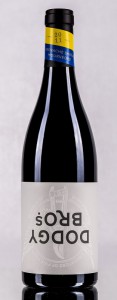 There was a curious chap at the Geddes winery during vintage. Canadian, intense, always tending his myriad ferments, some of which were as small as a few hundred kilos. We had some good chats about yeasts and aroma compounds, and he taught me some neat cellar skills. Turns out this fellow is Wes Pearson, sensory analyst at the AWRI and the winemaking third of Dodgy Brothers Wines.